Description
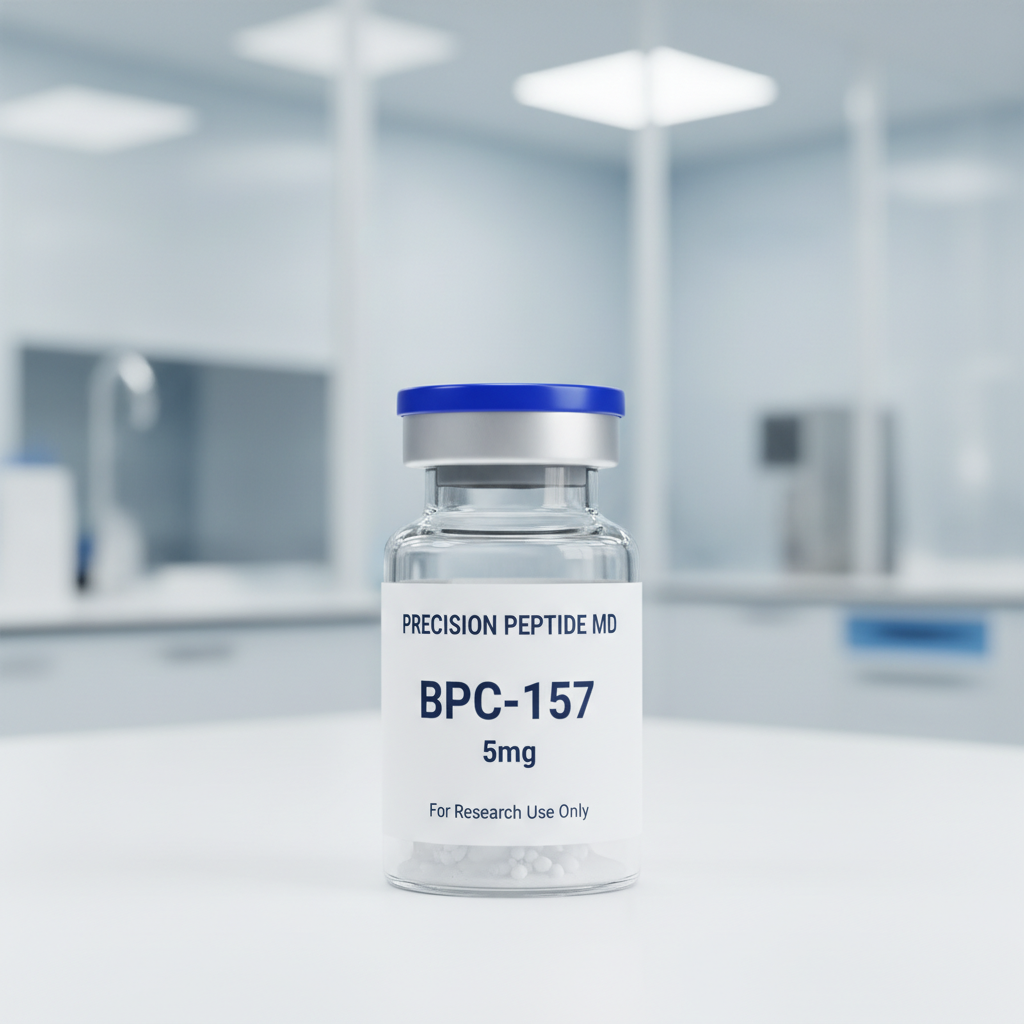
BPC-157 Research Peptide
BPC-157 is a research-grade pentadecapeptide derived from human gastric juice protein BPC, comprising 15 amino acids. It is supplied for controlled laboratory investigation (CAS 137525-51-0). Researchers study its involvement in cellular mechanisms related to tissue repair, specifically focusing on pathways such as VEGF, FAK-paxillin, and JAK-2. Its defined sequence allows for repeatable studies under standardized conditions, contributing to consistent experimental outcomes.
Because BPC-157 exhibits a consistent molecular structure, it is valued in controlled research environments. This consistency is critical for generating reproducible data when examining its interaction behavior with various biological substrates. Researchers investigate its influence on specific signaling patterns within cellular models, particularly those implicated in tissue maintenance and repair. The compound’s well-defined characteristics facilitate precise experimentation into its compound-specific mechanisms, supporting robust scientific inquiry.
In laboratory settings, BPC-157 is handled and prepared following standard peptide preparation and safety procedures. It is typically supplied as a lyophilized powder for stability. For storage, the compound should be kept in cool, dry conditions away from direct light. If reconstitution is necessary, bacteriostatic water is recommended. After reconstitution, refrigerate at 2-8°C for short-term use, or freeze at -20°C for extended storage to maintain its integrity.
The consistent composition of BPC-157 ensures reduced variation in experimental setups, which is vital for the reliability of research data. Its compatibility with structured research workflows makes it a suitable compound for long-term laboratory projects investigating complex biological processes. This consistency supports rigorous scientific methodology and the validation of experimental findings across multiple studies.
Ongoing research continues to include BPC-157 as a tool for understanding cellular regulation. Its defined sequence and stable behavior make it highly suitable for controlled research models aimed at elucidating fundamental biological mechanisms, particularly those involving tissue integrity and repair.
Important Notice: BPC-157 is provided strictly for research use only. This product is not intended for human or animal use, clinical applications, diagnostic procedures, or consumption of any kind. All research must be conducted by qualified professionals in appropriate laboratory environments and in compliance with applicable regulations and guidelines.
Frequently Asked Questions
What is BPC-157?
BPC-157 is a synthetic pentadecapeptide, consisting of 15 amino acids. It is derived from a fragment of the human gastric juice protein BPC. In research models, it is classified as a stable gastric pentadecapeptide, distinct from its native parent protein. Its specific sequence is Gly-Glu-Pro-Pro-Pro-Ser-Pro-Ala-Lys-Pro-Ala-Asp-Asp-Ala-Gly.
What is the origin of BPC-157?
BPC-157 is a synthetic analog of a naturally occurring protein found in human gastric juice, specifically a fragment of Body Protection Compound (BPC). While the native protein is larger, BPC-157 focuses on a specific 15-amino acid sequence. This design allows researchers to study the effects of this particular sequence in isolation within controlled laboratory settings.
What biological systems are studied using BPC-157?
In research settings, BPC-157 is primarily studied in models focusing on connective tissues, gastrointestinal integrity, and vascular systems. Researchers investigate its influence on cellular processes within these systems, including angiogenesis and extracellular matrix remodeling. This compound serves as a tool for examining complex biological responses in various tissue types under controlled experimental conditions.
What cellular pathways are investigated with BPC-157?
Researchers investigate BPC-157’s involvement with several key cellular pathways. Studies in controlled models examine its potential role in modulating the Vascular Endothelial Growth Factor (VEGF) pathway, critical for angiogenesis. Additionally, its interactions with the Focal Adhesion Kinase (FAK)-paxillin pathway and the Janus Kinase 2 (JAK-2) pathway are explored, both fundamental in cell adhesion and migration.
Why is BPC-157 of interest in peptide research?
BPC-157 is of interest in peptide research due to its well-defined pentadecapeptide structure and its consistent behavior in experimental models. Its specific amino acid sequence, derived from a gastric protein, presents a unique subject for investigating peptide-receptor interactions and downstream signaling. Researchers value it for its utility in exploring specific cellular responses, making it a valuable tool for understanding peptide-mediated biological regulation.
How should BPC-157 be stored and prepared for research?
BPC-157 is typically supplied as a lyophilized powder and should be stored in a cool, dry place, protected from light, for optimal stability. For reconstitution in research applications, bacteriostatic water is generally recommended. Once reconstituted, solutions should be refrigerated at 2-8°C for short-term use or frozen at -20°C in aliquots for extended storage, minimizing freeze-th
Reviews
There are no reviews yet.