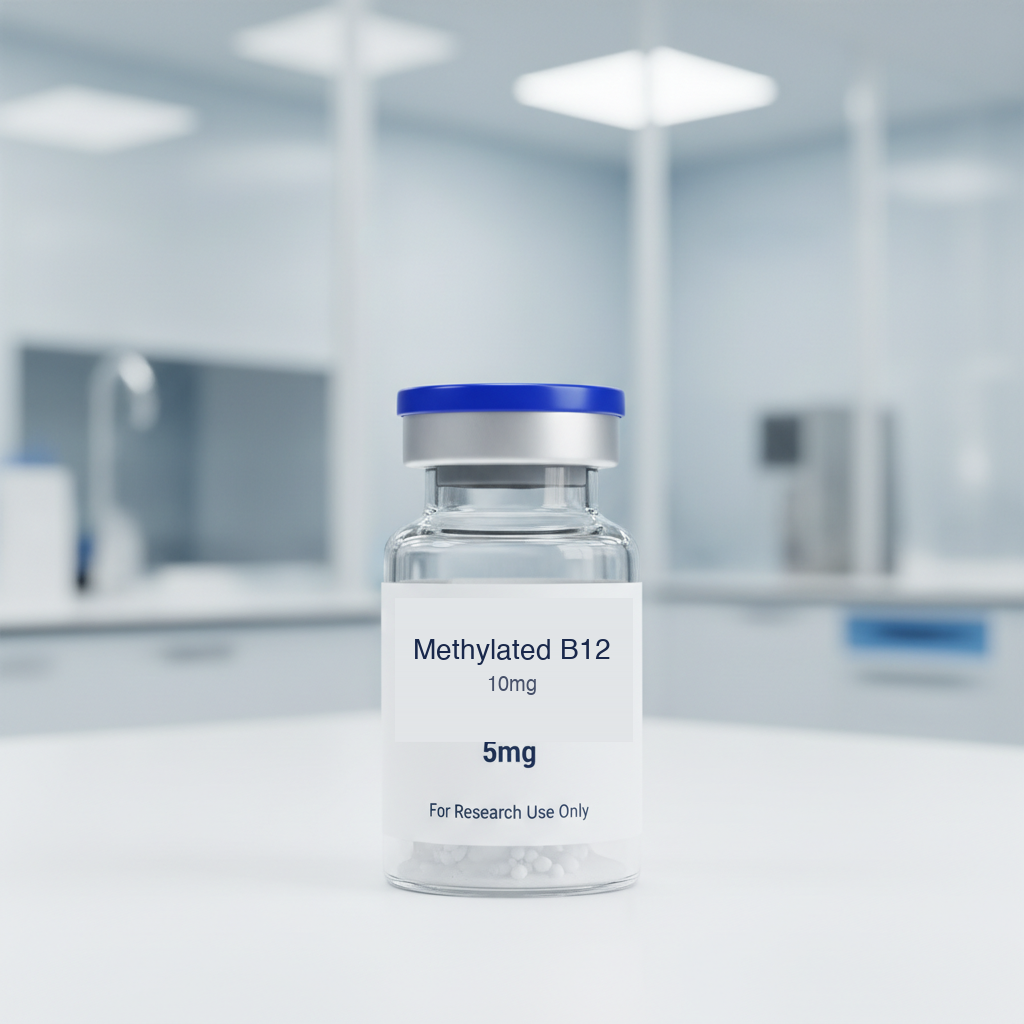
Description
Methylated B12 for Laboratory Research
Methylated B12, also known as methylcobalamin, is a research-grade vitamin derivative supplied for controlled laboratory investigation. This compound serves as a critical coenzyme in specific metabolic pathways, particularly those involving one-carbon metabolism. Researchers utilize Methylated B12 to study its biochemical roles, including its function in methyl group transfer reactions and its interaction with various enzymes under standardized conditions, allowing for repeatable experimental outcomes.
Because Methylated B12 possesses a defined chemical structure with a methyl group ligand, it is of particular interest to researchers examining the precise mechanisms of methylation. This characteristic allows for its application in controlled environments to investigate specific signaling patterns and interaction behaviors within cellular models. Its use facilitates consistent data acquisition, enabling scientists to explore compound-specific mechanisms related to its coenzyme activity and metabolic integration.
In laboratory settings, Methylated B12 is handled and prepared following standard biochemical preparation and safety procedures. It is supplied as a lyophilized powder. For storage, it should be kept in cool, dry conditions away from direct light. After reconstitution with an appropriate solvent, such as sterile water, the solution should be refrigerated at 2-8°C. For extended storage periods, it is recommended to freeze the reconstituted solution at -20°C.
The consistent composition and defined activity of Methylated B12 contribute to its value in structured research workflows. Its suitability for long-term laboratory projects is enhanced by its stable behavior under recommended storage and handling conditions, reducing experimental variation. This consistency is crucial for researchers aiming to achieve reliable and comparable results across multiple experimental trials.
Ongoing research continues to include Methylated B12 in studies exploring its fundamental biochemical roles. Its defined structure and stable behavior make it a suitable compound for controlled research models investigating metabolic regulation and enzymatic function.
Important Notice: Methylated B12 10mg is provided strictly for research use only. This product is not intended for human or animal use, clinical applications, diagnostic procedures, or consumption of any kind. All research must be conducted by qualified professionals in appropriate laboratory environments and in compliance with applicable regulations and guidelines.
Frequently Asked Questions
What is Methylated B12?
Methylated B12, or methylcobalamin, is a naturally occurring coenzyme form of vitamin B12 (cobalamin). It features a methyl group coordinated to the cobalt atom within its corrin ring structure. Unlike cyanocobalamin, methylcobalamin does not require metabolic activation to become a biologically active coenzyme, making it a direct participant in specific biochemical reactions in research models.
What is the significance of the methyl group in Methylated B12’s structure?
The methyl group in Methylated B12 is crucial for its function as a methyl donor. This structural feature enables its role as a coenzyme for methionine synthase (MTR), an enzyme that catalyzes the methylation of homocysteine to methionine. In research, this allows for precise studies into methyl transfer reactions and their implications for one-carbon metabolism pathways within controlled laboratory settings.
What biological systems are studied using Methylated B12?
Methylated B12 is studied in biological systems primarily related to one-carbon metabolism, the methionine cycle, and homocysteine metabolism. Researchers use this compound to investigate its roles in enzymatic reactions within cellular and organelle models, including studies focusing on mitochondrial function, neurotransmitter synthesis pathways, and nucleic acid methylation processes in laboratory environments.
What is the primary mechanism of action for Methylated B12 in research models?
In research models, the primary mechanism of action for Methylated B12 involves its function as a coenzyme for methionine synthase. It facilitates the transfer of a methyl group from 5-methyltetrahydrofolate to homocysteine, producing methionine. This process is fundamental for regenerating methionine from homocysteine, which is critical for maintaining S-adenosylmethionine (SAMe) levels, a universal methyl donor in various biochemical reactions.
Why is Methylated B12 of interest in metabolic research?
Methylated B12 is of interest in metabolic research due to its direct involvement in key one-carbon metabolic pathways. Researchers investigate its role in maintaining methylation cycles, which are essential for various cellular processes, including DNA synthesis and repair, gene expression regulation, and lipid metabolism. Its defined function allows for precise studies into metabolic regulation and potential implications for cellular energetics in controlled research settings.
What are the recommended storage and reconstitution procedures for Methylated B12?
Methylated B12 should be stored as a lyophilized powder in a cool, dry place, protected from light. For reconstitution, it is recommended to use sterile, bacteriostatic water to achieve the desired concentration for laboratory use. After reconstitution, the solution should be stored refrigerated at 2-8°C. For long-term preservation and stability in research, freezing at -20°C is advisable.
Reviews
There are no reviews yet.