Description
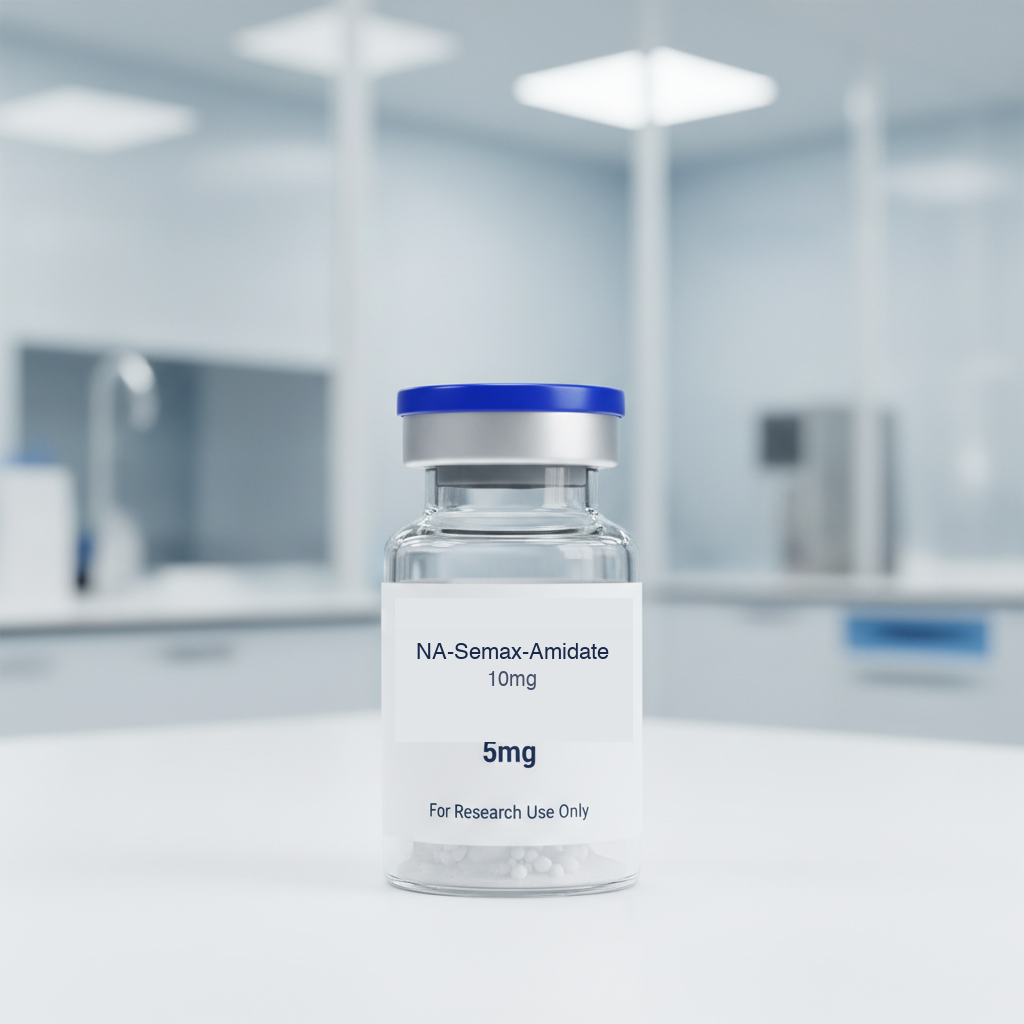
NA-Semax-Amidate Research Peptide
NA-Semax-Amidate is a synthetic heptapeptide analogue supplied for controlled laboratory investigation. This modified ACTH(4-10) derivative features N-acetyl and C-amide groups, modifications designed to influence its stability and activity profiles in research models. Researchers study NA-Semax-Amidate for its potential involvement in BDNF upregulation and its impact on pathways associated with cognitive function. Its defined chemical structure enables repeatable studies under standardized laboratory conditions.
Because of its consistent synthesis and defined molecular characteristics, NA-Semax-Amidate is valued in research requiring high data consistency. Investigators utilize this compound to explore specific signaling patterns within neural tissues, examining its interaction behavior with target receptors and its role in neurotrophic factor expression. The compound’s suitability for controlled environments allows for precise observation of its effects on cellular and systemic parameters, contributing to reliable experimental outcomes.
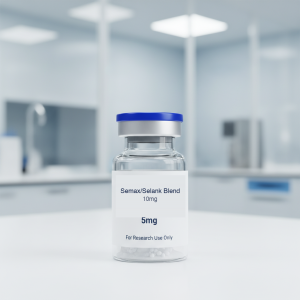
In laboratory settings, NA-Semax-Amidate is handled following standard peptide preparation and safety procedures. It is supplied as a lyophilized powder, typically in 10mg aliquots, ensuring stability prior to reconstitution. For storage, it should be kept in cool, dry conditions. After reconstitution, it is recommended to refrigerate at 2-8°C for short-term use, or freeze at -20°C for extended storage to maintain compound integrity.
The consistent composition of NA-Semax-Amidate ensures reduced variation between experimental batches, a critical factor for reproducibility. This compound’s compatibility with structured research workflows facilitates its integration into long-term laboratory projects focused on neural plasticity and cognitive processes, providing a stable and well-characterized research tool.
Ongoing research includes NA-Semax-Amidate in studies exploring neurobiological mechanisms. Its defined sequence and stable behavior make it suitable for controlled research models investigating its potential neurotrophic and neurocognitive effects.
Important Notice: NA-Semax-Amidate 10mg is provided strictly for research use only. This product is not intended for human or animal use, clinical applications, diagnostic procedures, or consumption of any kind. All research must be conducted by qualified professionals in appropriate laboratory environments and in compliance with applicable regulations and guidelines.
Frequently Asked Questions
What is NA-Semax-Amidate?
NA-Semax-Amidate is a synthetic heptapeptide analogue derived from the ACTH(4-10) sequence, chemically modified with N-acetyl and C-amide groups. These modifications are incorporated to influence its pharmacokinetic profile and stability in research applications. It is classified as a neuroactive peptide studied for its interactions within the central nervous system.
How do the N-acetyl and C-amide modifications affect NA-Semax-Amidate compared to its parent peptide?
The N-acetyl and C-amide modifications on NA-Semax-Amidate are structural alterations designed to potentially enhance its stability against enzymatic degradation and influence its bioavailability in research models. These changes may also modify its receptor binding characteristics or half-life compared to the unmodified ACTH(4-10) fragment, aspects actively investigated in laboratory settings.
What biological systems are studied using NA-Semax-Amidate?
NA-Semax-Amidate is primarily studied in research models focusing on the central nervous system. Investigations frequently target neuronal tissues and pathways associated with neurotrophic factor expression, particularly BDNF. Researchers also examine its influence on synaptic plasticity, neurogenesis, and various aspects of cognitive function in controlled laboratory environments.
What is the proposed mechanism of action for NA-Semax-Amidate in research?
In research, NA-Semax-Amidate is studied for its potential to modulate neurotrophic pathways, with a particular focus on brain-derived neurotrophic factor (BDNF) upregulation. Researchers hypothesize that this compound may interact with specific receptors or signaling cascades to influence neuronal survival, differentiation, and synaptic function, contributing to its observed effects in cognitive research models.
Why is NA-Semax-Amidate of interest in cognitive and neuro peptide research?
NA-Semax-Amidate is of interest due to its structural derivation from ACTH(4-10) and its reported association with BDNF upregulation and cognitive enhancement in research models. Its specific modifications make it a valuable tool for investigating neurotrophic mechanisms and exploring peptide-based interventions for neural plasticity and cognitive function under controlled laboratory conditions.
How should NA-Semax-Amidate be reconstituted and stored for research?
For research use, NA-Semax-Amidate is typically reconstituted with sterile bacteriostatic water. After reconstitution, it should be stored refrigerated at 2-8°C for short-term experimental periods, generally up to a few weeks. For extended storage and to maintain long-term stability, aliquoting and freezing at -20°C is recommended, minimizing freeze-thaw cycles.
Reviews
There are no reviews yet.