Description
L-Carnitine for Laboratory Research
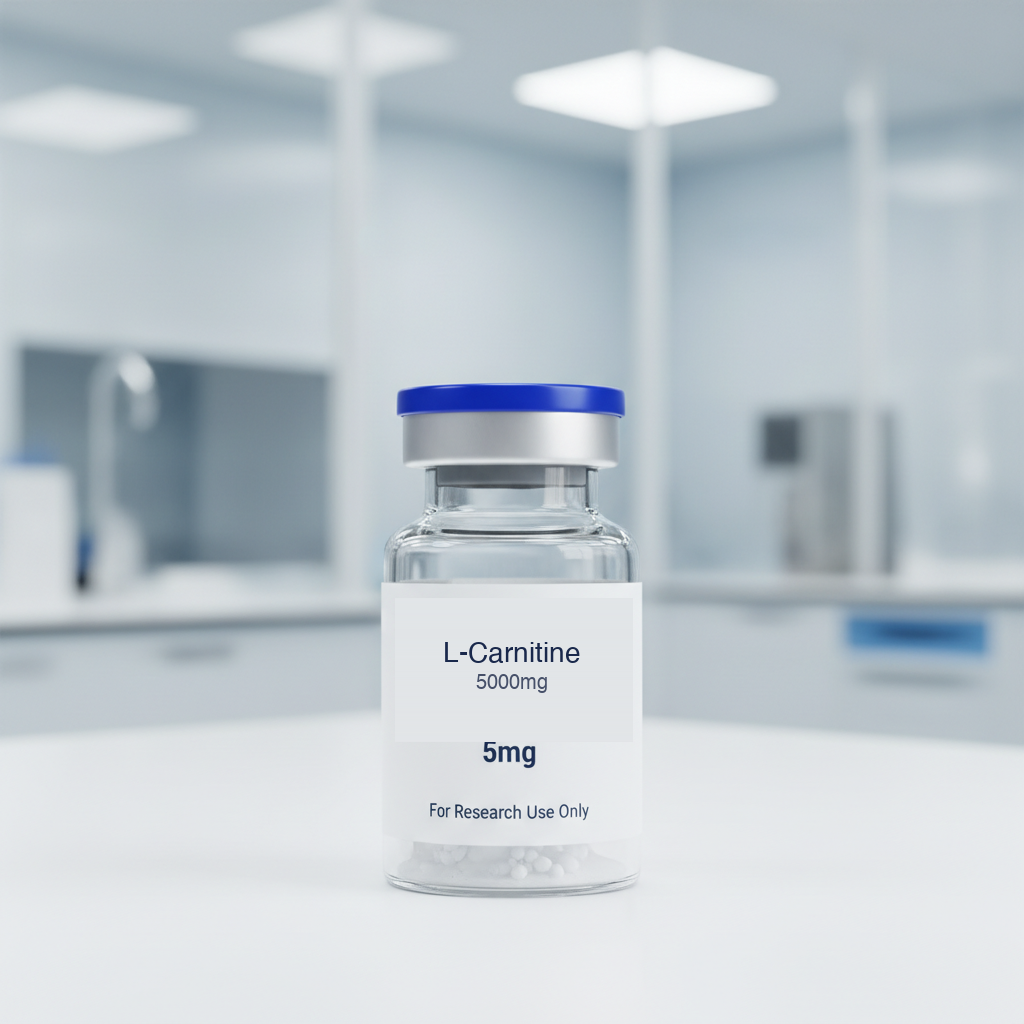
L-Carnitine is a research-grade amino acid derivative supplied for controlled laboratory investigation. Researchers primarily study L-Carnitine for its established role in facilitating the transport of long-chain fatty acids across the inner mitochondrial membrane, a critical step in beta-oxidation. Its defined molecular structure allows for consistent experimental conditions, enabling repeatable studies under standardized conditions to explore its precise mechanistic involvement in cellular bioenergetics.
Because L-Carnitine is a well-characterized metabolic intermediate, researchers value its utility in controlled environments for investigating cellular energy dynamics. Studies often focus on its impact on lipid oxidation, ATP production, and overall mitochondrial function, providing consistent data for understanding specific metabolic pathways. Investigations examine signaling patterns and interaction behavior within the intricate network of cellular energy regulation, contributing to a clearer understanding of compound-specific mechanisms.
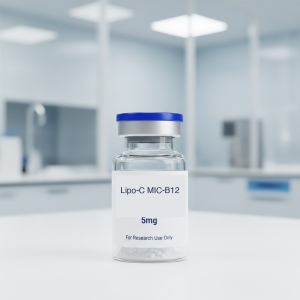
In laboratory settings, L-Carnitine is handled and prepared following standard chemical preparation and safety procedures. This product is supplied as a lyophilized powder, ensuring stability and ease of precise measurement for experimental protocols. For optimal preservation, store the lyophilized powder in cool, dry conditions. After reconstitution, typically with sterile, deionized water or an appropriate solvent, solutions should be refrigerated at 2-8°C. For extended storage, aliquots may be frozen at -20°C.
The consistent composition of L-Carnitine 5000mg reduces experimental variation, offering high suitability for long-term laboratory projects. Its compatibility with structured research workflows ensures data consistency across multiple experimental series. This compound’s reliable behavior in controlled models makes it a valuable tool for investigating complex metabolic processes and their regulatory mechanisms.
Ongoing research includes this compound for examining its defined role in metabolic transport and energy conversion. Its stable behavior and suitability for controlled research models contribute to robust and reproducible experimental outcomes.
Important Notice: L-Carnitine 5000mg is provided strictly for research use only. This product is not intended for human or animal use, clinical applications, diagnostic procedures, or consumption of any kind. All research must be conducted by qualified professionals in appropriate laboratory environments and in compliance with applicable regulations and guidelines.
Frequently Asked Questions
What is L-Carnitine?
L-Carnitine is a quaternary ammonium compound biosynthesized from the amino acids lysine and methionine. It is classified as an amino acid derivative, not a peptide. In research models, it is studied for its essential role in cellular metabolism, particularly in the transport of long-chain fatty acids into the mitochondria for subsequent beta-oxidation and energy production. Its molecular structure contains a trimethylammonium group.
How does L-Carnitine interact with mitochondrial membranes in research?
In controlled research settings, L-Carnitine facilitates the translocation of fatty acids across the inner mitochondrial membrane. It forms acylcarnitine esters with long-chain fatty acids, a reaction catalyzed by carnitine palmitoyltransferase I (CPT1) on the outer mitochondrial membrane. These acylcarnitine molecules are then transported into the mitochondrial matrix by carnitine-acylcarnitine translocase (CACT), where CPT2 converts them back to fatty acyl-CoAs for oxidation.
What biological systems are studied using L-Carnitine?
Researchers utilize L-Carnitine in studies investigating various biological systems, primarily those involved in energy metabolism. This includes cellular bioenergetics, lipid metabolism in liver and muscle tissues, and mitochondrial function. Investigations extend to understanding its involvement in glucose utilization, oxidative stress responses, and the regulation of gene expression related to metabolic pathways in various in vitro and in vivo research models.
What is the primary mechanism of action of L-Carnitine in cellular metabolism?
The primary mechanism of action of L-Carnitine in cellular metabolism is its role as a carrier molecule for fatty acids. It enables the entry of long-chain fatty acids into the mitochondrial matrix, where they undergo beta-oxidation to generate acetyl-CoA for the tricarboxylic acid (TCA) cycle. This process is crucial for ATP production and is a central pathway for energy generation in many cell types and tissues studied in controlled laboratory environments.
Why is L-Carnitine of interest in metabolic research?
L-Carnitine is of significant interest in metabolic research due to its pivotal role in lipid metabolism and mitochondrial function. Researchers investigate its potential impact on energy substrate utilization, cellular respiration, and the regulation of metabolic homeostasis. Its study contributes to understanding how cells adapt to varying energy demands and how disruptions in fatty acid transport can influence cellular health and function in controlled experimental models.
What are the recommended storage conditions for L-Carnitine for research?
For research-grade L-Carnitine supplied as a lyophilized powder, it should be stored in a cool, dry place, typically at room temperature (20-25°C) or refrigerated (2-8°C) away from light and moisture. Once reconstituted with an appropriate solvent like sterile, deionized water, the solution should be stored refrigerated at 2-8°C. For extended preservation, aliquots of the reconstituted solution are recommended to be stored frozen at -20°C to maintain compound integrity for long-term experimental use.
Reviews
There are no reviews yet.