Description
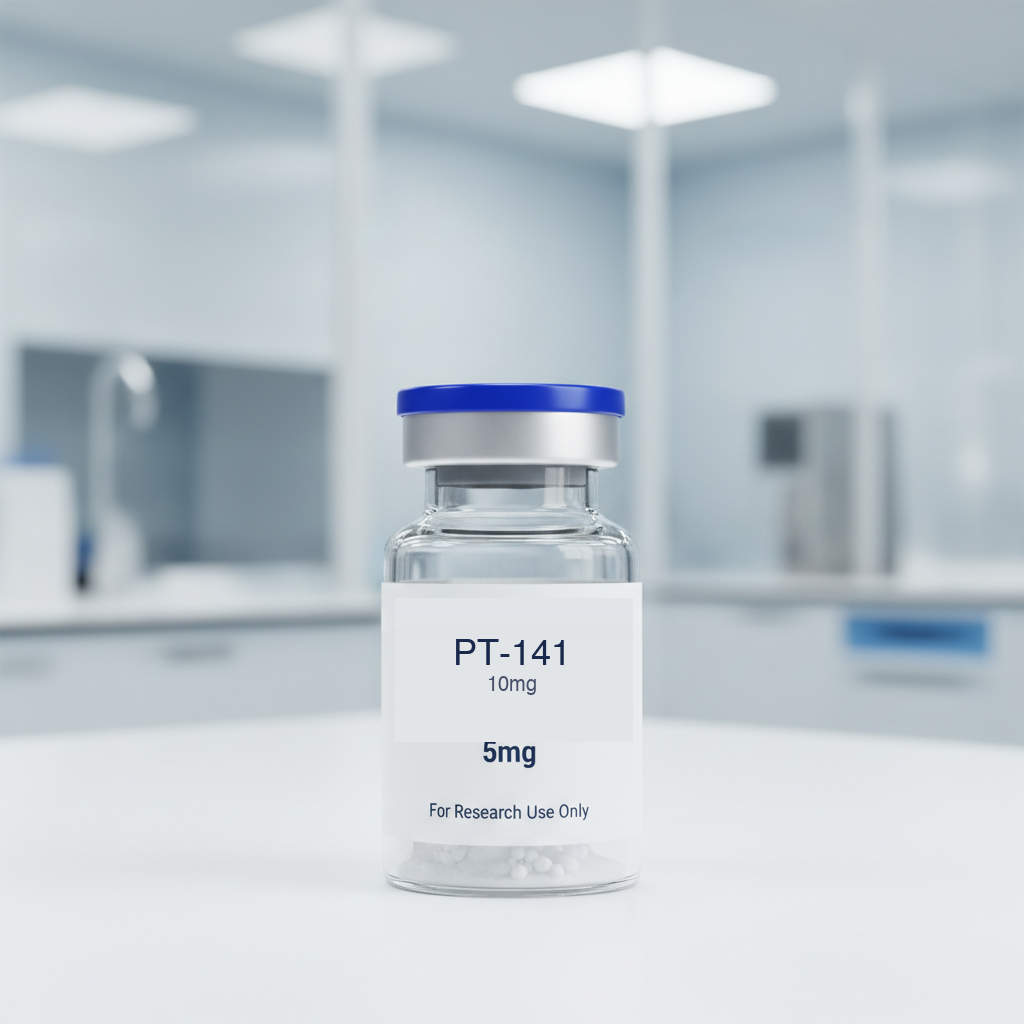
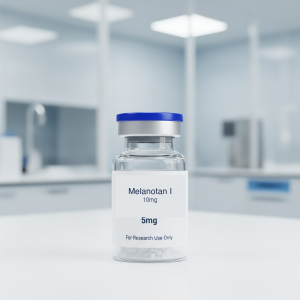
PT-141 Research Peptide
PT-141, also known as bremelanotide, is a synthetic cyclic heptapeptide supplied for controlled laboratory investigation. Derived from Melanotan II, this compound is studied for its specific agonist activity at melanocortin receptors MC3R and MC4R within the central nervous system. Its defined chemical structure (CAS 189691-06-3) enables researchers to conduct repeatable studies under standardized conditions, allowing for precise examination of its role in melanocortin pathway activation.
Because of its targeted agonism, PT-141 is valued by researchers for investigating specific signaling patterns within the melanocortin system. Its consistent composition allows for reliable dose-response studies and receptor binding assays, which are critical for understanding G protein-coupled receptor (GPCR) dynamics and their physiological implications. This compound facilitates the generation of consistent data sets for robust scientific analysis in controlled environments.
In laboratory settings, PT-141 is handled following standard peptide preparation and safety procedures. It is supplied as 10mg of lyophilized powder. For reconstitution, bacteriostatic water is recommended. Store lyophilized material in cool, dry conditions. After reconstitution, refrigerate at 2-8°C for short-term use, or freeze at -20°C for extended storage to maintain compound integrity.
The consistent composition of PT-141 ensures reduced variation in experimental outcomes, making it highly compatible with structured research workflows. This reliability is crucial for long-term laboratory projects that demand consistent experimental conditions and data reproducibility across multiple studies and time points, supporting robust scientific inquiry.
Ongoing research frequently incorporates PT-141 as a key tool. Its defined sequence and stable behavior make it suitable for controlled research models focused on understanding specific aspects of the central melanocortin pathway and its receptor interactions.
Important Notice: PT-141 10mg is provided strictly for research use only. This product is not intended for human or animal use, clinical applications, diagnostic procedures, or consumption of any kind. All research must be conducted by qualified professionals in appropriate laboratory environments and in compliance with applicable regulations and guidelines.
Frequently Asked Questions
What is PT-141?
PT-141, scientifically known as bremelanotide, is a synthetic cyclic heptapeptide. It is derived from Melanotan II and functions as a selective agonist for the melanocortin receptors MC3R and MC4R. Its chemical identity is defined by CAS 189691-06-3, making it a well-characterized compound for research purposes.
How does PT-141’s structure relate to its receptor activity?
The cyclic heptapeptide structure of PT-141 is integral to its specific receptor binding and activity. This conformation allows for targeted interaction with the extracellular domains of MC3R and MC4R, facilitating precise activation of these G protein-coupled receptors. This structural specificity is key to its utility in mechanistic studies.
What biological systems are studied using PT-141?
Researchers primarily use PT-141 to study the central nervous system, with a specific focus on the melanocortin system. Investigations center on the signaling pathways involving MC3R and MC4R, exploring their roles in neuroendocrine regulation and broader G protein-coupled receptor (GPCR) dynamics within controlled laboratory models.
What is the mechanism of action of PT-141 in research models?
In research models, PT-141 acts as an agonist, binding to and activating the MC3R and MC4R receptors. This activation initiates subsequent intracellular signaling cascades within the central melanocortin pathway. The precise mechanism allows for detailed examination of receptor-ligand interactions and downstream cellular responses.
Why is PT-141 of interest in peptide research?
PT-141 holds significant interest in peptide research due to its selective agonism of melanocortin receptors. It provides a valuable tool for scientists to investigate the specific roles of MC3R and MC4R in various physiological processes, offering insights into receptor function and potential therapeutic targets without direct human application.
What are the recommended storage conditions for PT-141?
Lyophilized PT-141 should be stored in a cool, dry place, away from direct light. After reconstitution with bacteriostatic water, the solution should be refrigerated at 2-8°C for short-term use (typically up to 30 days) or frozen at -20°C for extended storage to maintain the compound’s stability and integrity over longer periods.
Reviews
There are no reviews yet.