Description
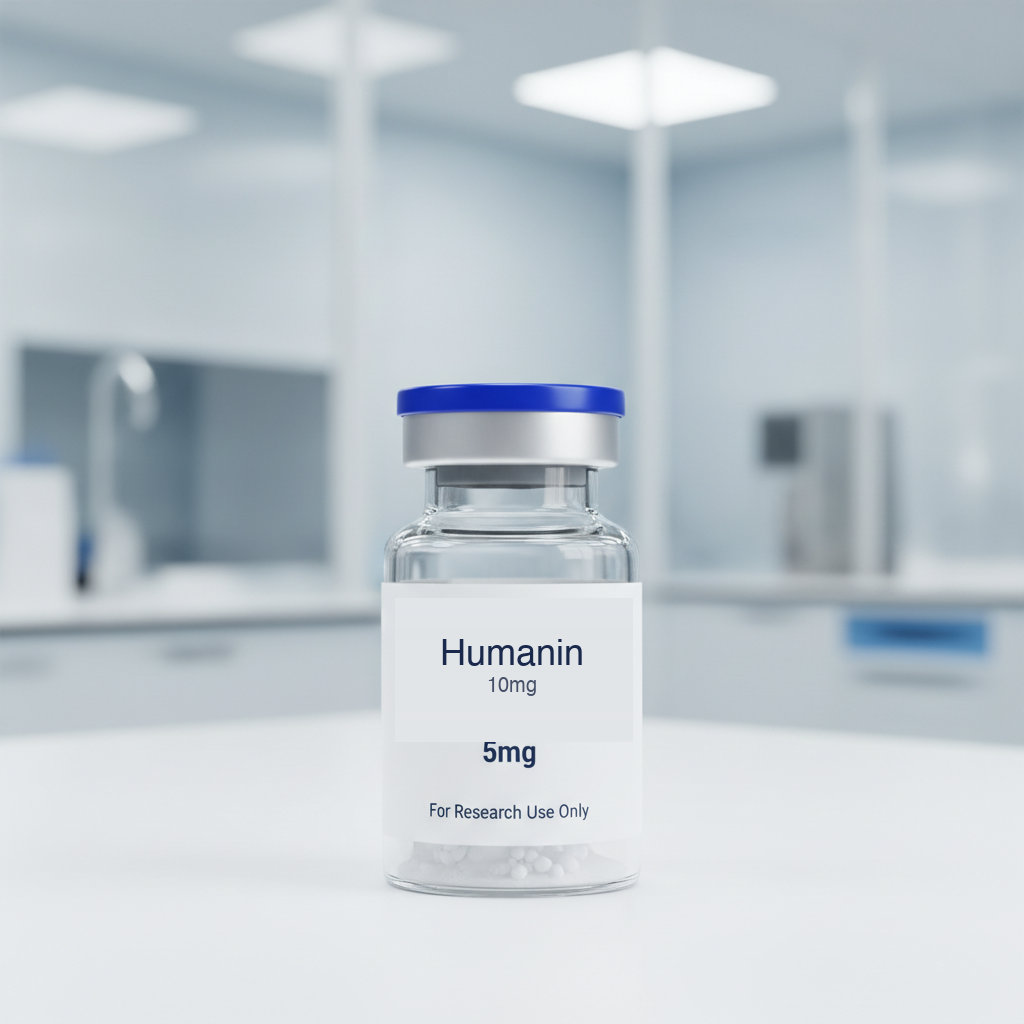
Humanin Research Peptide
Humanin is a synthetic mitochondrial-derived peptide supplied for controlled laboratory investigation. It is a 24-amino acid peptide encoded by the MT-RNR2 gene, and its structural characteristics allow for consistent behavior in various experimental setups. Researchers study Humanin for its role in cellular resilience and specific interaction pathways, providing a defined compound for repeatable studies under standardized conditions.
Because its defined sequence and mitochondrial origin make it a distinct subject for investigation, researchers value Humanin for exploring specific signaling patterns related to cellular stress responses. Studies emphasize controlled environments to observe its interaction behavior, particularly concerning BAX, and to ensure data consistency when examining its potential cytoprotective and neuroprotective mechanisms.
In laboratory settings, Humanin is handled following standard peptide preparation and safety procedures. This product is supplied as a lyophilized powder. Researchers should store it in cool, dry conditions. For reconstitution, bacteriostatic water is recommended. After reconstitution, refrigerate at 2-8°C, and for extended storage, freeze at -20°C to maintain stability.
Humanin’s consistent composition and well-defined properties contribute to reduced experimental variation, enhancing the reliability of research data. Its suitability for structured research workflows supports long-term laboratory projects focused on understanding complex cellular processes, ensuring compatibility with diverse experimental methodologies.
Ongoing research includes Humanin as a compound for investigating mitochondrial-derived peptide functions. Its defined sequence and stable behavior make it suitable for controlled research models examining cellular protection and neuronal integrity.
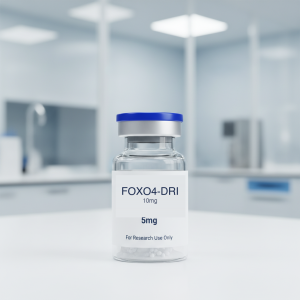
Important Notice: Humanin 10mg is provided strictly for research use only. This product is not intended for human or animal use, clinical applications, diagnostic procedures, or consumption of any kind. All research must be conducted by qualified professionals in appropriate laboratory environments and in compliance with applicable regulations and guidelines.
Frequently Asked Questions
What is Humanin?
Humanin is a 24-amino acid mitochondrial-derived peptide (MDP) encoded by the MT-RNR2 gene within the mitochondrial genome. It is classified as a cytoprotective factor that has garnered interest in various research models. Its distinct sequence and origin make it a unique subject for investigating cellular signaling pathways.
How is Humanin structurally characterized?
Humanin is characterized by its specific 24-amino acid sequence, which is directly encoded by the MT-RNR2 gene located in the mitochondrial 16S rRNA. This mitochondrial origin is central to its classification as an MDP, distinguishing it from nuclear-encoded peptides. Its defined structure facilitates precise experimental design in research settings.
What biological systems are studied using Humanin?
Researchers primarily study Humanin in models related to cellular stress and survival, including neuronal systems, where its neuroprotective properties are investigated. Studies also focus on its role in various tissues to understand its broad cytoprotective effects against different insults, thereby exploring its impact on cellular resilience in controlled environments.
What is the proposed mechanism of action for Humanin in research models?
In research models, Humanin’s proposed mechanism involves direct interaction with pro-apoptotic proteins such as BAX, inhibiting their translocation and activation, thereby contributing to cytoprotection. It is also studied for its ability to modulate intracellular signaling pathways, influencing cell survival and stress responses in various cellular contexts, rather than direct health benefits.
Why is Humanin of interest in anti-aging and longevity research?
Humanin is of interest in anti-aging and longevity research due to its observed roles in enhancing cellular resilience and maintaining mitochondrial function in experimental models. Researchers investigate its capacity to mitigate cellular damage and support cell survival under various stressors, which are factors relevant to the study of age-related cellular decline in controlled laboratory settings.
What are the recommended storage conditions for Humanin?
Humanin is supplied as a lyophilized powder and should be stored in a cool, dry environment, away from direct light, for optimal stability. Once reconstituted with bacteriostatic water, the solution should be refrigerated at 2-8°C for short-term use. For extended preservation, it is recommended to freeze aliquots at -20°C.
Reviews
There are no reviews yet.