Description
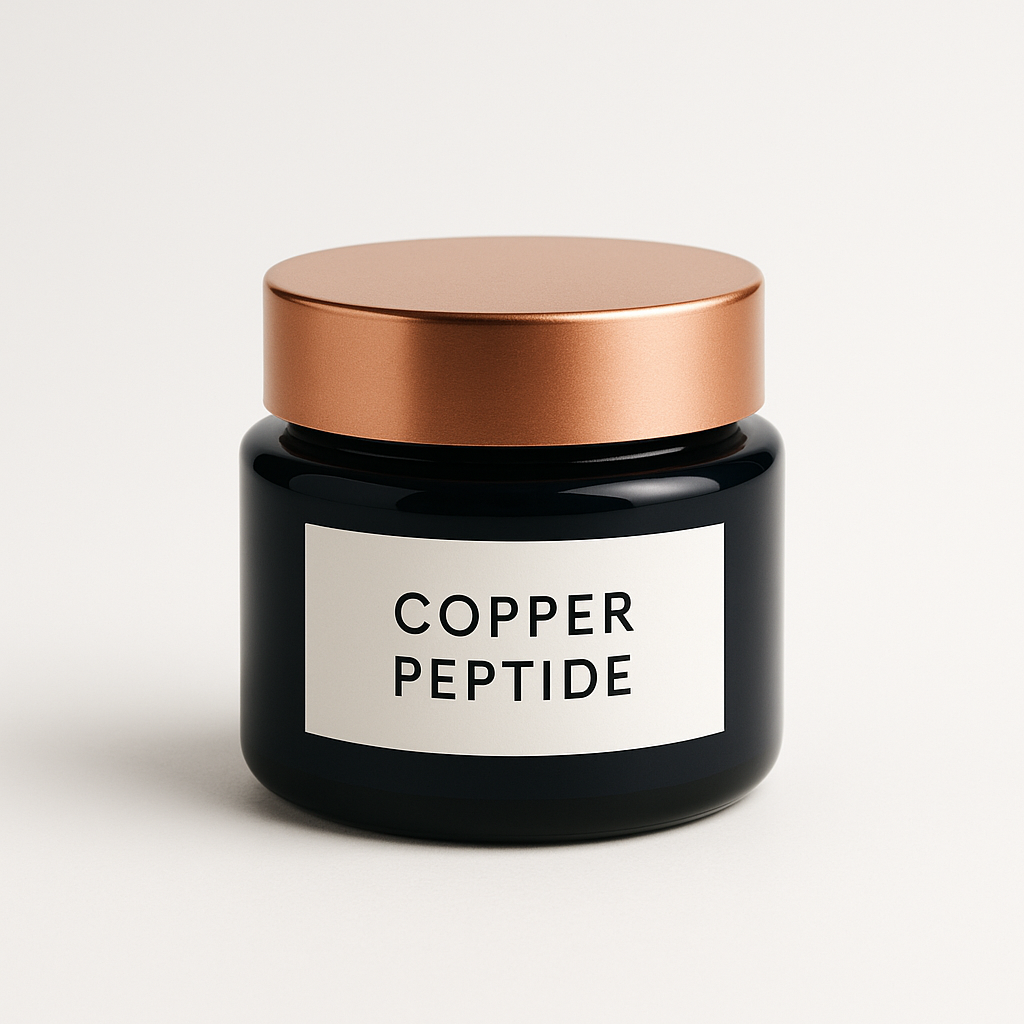
Copper Peptide Cream for Laboratory Research
Copper Peptide Cream is a research-grade complex of copper(II) and the tripeptide glycyl-L-histidyl-L-lysine (GHK), supplied for controlled laboratory investigation. This compound is studied in vitro for its defined structure and consistent composition, enabling repeatable studies under standardized conditions. Researchers investigate its interactions within cellular environments, particularly concerning extracellular matrix components and redox balance in various research models.
Because of its well-characterized sequence and copper-binding properties, researchers value Copper Peptide Cream for its consistent behavior in experimental models. Studies emphasize controlled environments to observe specific signaling patterns and interaction behaviors. The compound’s defined mechanism allows for precise investigations into cellular responses and the impact on tissue-level phenomena under controlled conditions, ensuring data consistency and robust experimental outcomes.
In laboratory settings, Copper Peptide Cream is handled following standard peptide preparation and safety procedures. It is supplied as a topical cream formulation for external application in appropriate research models. For storage, it should be kept in cool, dry conditions, away from direct light. After initial use, refrigeration at 2-8°C is recommended to maintain stability for short-term projects and preserve compound integrity.
The consistent composition of Copper Peptide Cream reduces experimental variation, offering high suitability for long-term laboratory projects. Its compatibility with structured research workflows ensures reliable data generation across various experimental phases. This consistency is crucial for comparative studies and for establishing reproducible findings in controlled research environments, supporting robust scientific inquiry.
Ongoing research includes Copper Peptide Cream in studies exploring cellular regeneration and tissue repair mechanisms. Its defined sequence and stable behavior make it suitable for controlled research models examining complex biological processes at the molecular and cellular levels, contributing to a deeper understanding of tissue dynamics.
Important Notice: Copper Peptide Cream is provided strictly for research use only. This product is not intended for human or animal use, clinical applications, diagnostic procedures, or consumption of any kind. All research must be conducted by qualified professionals in appropriate laboratory environments and in compliance with applicable regulations and guidelines.
Frequently Asked Questions
What is Copper Peptide Cream?
Copper Peptide Cream contains GHK-Cu, a naturally occurring tripeptide (glycyl-L-histidyl-L-lysine) complexed with copper(II) ions. While found endogenously in human plasma, this research-grade compound is synthetically produced for controlled laboratory studies. Its defined structure includes three amino acid residues, making it a subject of interest in peptide and transition metal research for its specific binding characteristics.
How does the copper ion interact with the GHK tripeptide in research models?
In research models, the copper(II) ion forms a stable chelate with the GHK tripeptide. The nitrogen atoms from the histidine imidazole ring, the alpha-amino group of glycine, and the deprotonated amide nitrogen of glycine coordinate the copper ion. This specific coordination geometry is critical for its stability and influences its interaction behavior within various biological systems under study in laboratory environments, impacting its observed activity.
What biological systems are studied using Copper Peptide Cream?
Researchers utilize Copper Peptide Cream in studies involving various biological systems, including in vitro models of skin fibroblasts, endothelial cells, and components of the extracellular matrix. Investigations focus on its influence on collagen and elastin synthesis pathways, antioxidant defense mechanisms, and cellular responses to oxidative stress within controlled laboratory settings, providing insights into tissue dynamics and cellular repair processes.
What mechanisms are investigated in studies involving Copper Peptide Cream?
Studies involving Copper Peptide Cream investigate several mechanisms, including its potential role in modulating extracellular matrix remodeling by influencing collagen and elastin production. Researchers also examine its antioxidant properties, involving the scavenging of reactive oxygen species, and its impact on angiogenesis-related pathways. These investigations are conducted in controlled laboratory environments to delineate specific cellular and molecular effects and understand complex biological interactions.
Why is Copper Peptide Cream of interest in peptide research?
Copper Peptide Cream is of significant interest in peptide research due to its unique ability to chelate copper ions and its observed bioactivity in various in vitro models. Its relatively small size and well-defined sequence make it an excellent subject for studying peptide-metal interactions and their downstream effects on cellular processes, such as gene expression and protein synthesis, under controlled experimental conditions, offering insights into metallopeptide function.
What considerations are important for combining Copper Peptide Cream with other research compounds?
When combining Copper Peptide Cream with other research compounds, researchers must consider potential interactions, particularly concerning pH stability and the presence of other chelating agents. Compatibility studies are crucial to ensure the stability and activity of all compounds within the experimental system. Controlled titrations and spectroscopic analyses may be employed to verify the integrity of the research mixture before application in structured laboratory assays, ensuring experimental validity.

Reviews
There are no reviews yet.